
For athlete’s foot treatment in Pontiac, MI, keep your feet clean and completely dry, especially between the toes, and start an over-the-counter antifungal such as terbinafine or clotrimazole as directed for 1–4 weeks.
If burning, peeling, odor, cracking, or redness persists beyond two weeks, spreads, or shows warmth, swelling, or pus, you need medical evaluation.
Specialty Urgent Care in Pontiac can confirm the diagnosis, rule out bacterial infection, and guide the next steps clearly through its Urgent Care Services.
Main Takeaways
- Athlete’s foot causes itching, burning, peeling, redness, and odor, often between the toes or on the soles.
- Warm, moist conditions, tight shoes, communal showers, and poor drying of the toes commonly trigger or worsen athlete’s foot.
- Treatment usually includes topical antifungals such as terbinafine or clotrimazole, applied consistently for 1–4 weeks and continued after improvement.
- Urgent care in Pontiac, MI can diagnose athlete’s foot and provide prescription treatment for resistant, extensive, or nail-involving infections.
- Seek prompt medical care for spreading rash, swelling, pus, fever, worsening pain, or if symptoms persist after two weeks of OTC treatment.
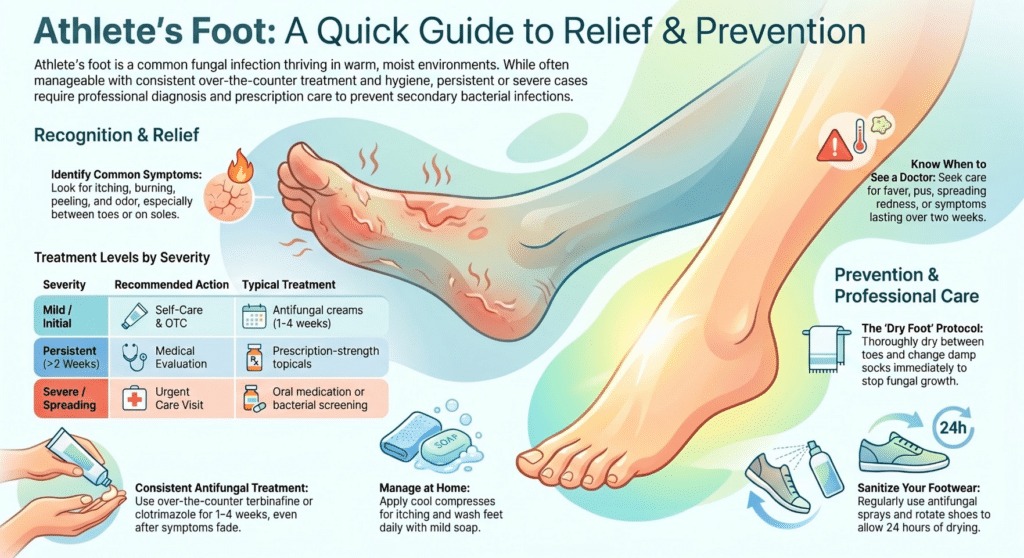
Common Symptoms of Athlete’s Foot in Pontiac, MI
You may first notice persistent itching and burning, especially between your toes or on the soles of your feet. As the infection progresses, you can develop redness, peeling, and skin that cracks or forms small blisters. A noticeable odor in the toe webs is also common and can indicate ongoing fungal overgrowth.
Itching And Burning
Often, itching and burning are the earliest signs of athlete’s foot, especially between the toes, where moisture and friction allow fungus to grow. You may notice an itchy sensation after sweating, exercise, or wearing tight shoes. Burning can intensify when the skin remains damp, signaling irritation from fungal overgrowth rather than simple dryness or fatigue.
If symptoms persist, prompt evaluation helps you protect your health. At Specialty Urgent Care in Pontiac, MI, clinicians can provide a same-day diagnosis and recommend antifungal treatment for athlete’s foot.
Evidence-based treatment for burning feet fungal infection may include topical antifungals, hygiene guidance, and shoe sanitizing. Early care limits spread, reduces discomfort, and supports safer daily activity for you and those you serve.
Redness And Peeling
Redness and peeling usually appear as the fungal infection disrupts the outer layer of skin, especially between the toes and along the soles. You may notice inflamed skin, fine scaling, and sheets of peeling that worsen after sweating or wearing occlusive shoes.
These changes signal active irritation and ongoing fungal growth, not simple dryness alone.
If you’re searching for foot fungus treatment near me, Pontiac, Michigan, prompt evaluation helps protect your comfort and mobility. Over-the-counter antifungal creams for foot fungus often reduce redness and scaling when used consistently as directed.
If symptoms persist, a podiatrist specializing in athlete’s foot in Pontiac, MI, can confirm the diagnosis and tailor care. Knowing how to get rid of athlete’s foot fast starts with early treatment, clean footwear, and keeping your feet dry daily.
Cracked Or Blistered Skin
When athlete’s foot advances, the affected skin can split into painful cracks or develop small fluid-filled blisters, especially between the toes and along high-friction areas of the sole. These openings weaken your skin barrier, increase sensitivity, and make walking, standing, or serving others more difficult in your daily responsibilities.
You may notice stinging, burning, or sharp discomfort when moisture, sweat, or friction irritates these areas. Blisters can rupture, leaving raw skin that feels highly sensitive and vulnerable to secondary bacterial infection. Cracks may deepen if you keep wearing damp socks or tight footwear, delaying mending and worsening inflammation.
Early evaluation matters because antifungal treatment, skin-protective measures, and moisture control can reduce pain, support recovery, and help you continue caring for your work, family, and community safely each day.
Toe Web Odor
Toe web odor can appear alongside itching, peeling, or cracked skin and usually signals persistent moisture and fungal overgrowth between the toes. You may notice a sour, musty smell that returns after washing, especially if sweat, tight footwear, or prolonged dampness keeps the skin macerated.
As the barrier weakens, bacteria can join the fungal infection and intensify the odor.
You shouldn’t ignore this symptom, particularly if you spend long hours on your feet caring for others. Early evaluation helps you protect your comfort, mobility, and hygiene.
Keep the area clean and dry, change socks regularly, and use breathable shoes. If the odor persists, worsens, or is accompanied by redness, swelling, drainage, or pain, you need prompt medical assessment to confirm athlete’s foot and guide effective treatment options.

What Causes Athlete’s Foot Infections in Pontiac, MI?
Develop athlete’s foot when dermatophyte fungi infect the outer layer of skin, usually on the feet and between the toes. These organisms thrive in warm, moist environments, so you’re more likely to develop an infection when sweat stays trapped in socks, shoes, or damp flooring. Locker rooms, communal showers, and pool decks commonly harbor fungal particles that transfer through direct contact.
You also increase risk when skin becomes irritated, macerated, or cracked, because fungi enter more easily through damaged tissue. Wearing tight, non-breathable footwear, sharing towels or shoes, and not drying carefully between your toes all support fungal growth.
Certain factors increase the risk of infection, including diabetes, excessive sweating, immune compromise, and a history of fungal infection. If you spend long hours on your feet while caring for others, moisture and friction can build throughout the day. Good hygiene and moisture control reduce exposure and limit conditions that fungi need to multiply on skin surfaces.
When to Seek Medical Treatment for Athlete’s Foot in Pontiac, MI
You should seek medical treatment if your athlete’s foot doesn’t improve with appropriate over-the-counter therapy or if it continues to spread, crack, or cause significant discomfort. You also need prompt evaluation if you develop signs of secondary infection, such as increasing redness, swelling, warmth, drainage, or pain. Early assessment helps confirm the diagnosis, rule out other skin conditions, and guide effective treatment.
Persistent Or Worsening Symptoms
Although mild athlete’s foot often improves with over-the-counter antifungal treatment, persistent or worsening symptoms warrant medical evaluation. If itching, scaling, cracking, or burning continue beyond two weeks despite proper use of antifungal cream, you shouldn’t delay care. Ongoing symptoms can indicate a resistant fungal infection, an incorrect diagnosis, or another skin condition requiring different treatment.
You should also seek medical attention if the rash spreads to your soles, toenails, or hands, or if walking becomes uncomfortable. Clinicians can examine the affected skin, confirm the cause, and recommend targeted therapy, including prescription-strength topical or oral medication when appropriate. Prompt evaluation helps reduce symptom duration, limits transmission to others, and supports your ability to stay active, comfortable, and present for the people who rely on you daily.
Signs Of Secondary Infection
Sometimes, athlete’s foot damages the skin enough to let bacteria enter, creating a secondary infection that needs prompt medical treatment. You should seek care quickly if you notice signs suggesting cellulitis or deeper tissue involvement, especially if you’re caring for others and need to stay healthy.
- Increasing redness or warmth: If the rash spreads, feels hot, or becomes more tender, bacteria may be causing inflammation beyond the superficial fungal infection.
- Swelling, pus, or foul odor: Drainage, yellow crusting, or significant swelling can indicate bacterial overgrowth and skin breakdown.
- Fever or red streaks: Systemic symptoms, swollen lymph nodes, or streaking up the foot or leg require urgent evaluation.

Prompt treatment can reduce complications, preserve mobility, and help you continue to serve your family, patients, or community safely.
Athlete’s Foot Treatment Options in Pontiac, MI
In Pontiac, MI, athlete’s foot treatment options depend on the severity of the infection and how long symptoms have been present. If your rash is mild, your clinician may confirm the diagnosis through examination and guide you on strict foot hygiene, moisture control, and shoe disinfection. If the skin is macerated, cracked, or painful, you may need prompt evaluation to rule out bacterial involvement or deeper tissue irritation.
At an urgent care clinic, you can receive a focused assessment without a long wait. Board-certified providers can examine scaling, redness, odor, and web-space breakdown, then decide whether testing or additional wound care is needed. In-house lab services can help clarify uncertain cases quickly.
If you have diabetes, poor circulation, or immune compromise, early medical review is especially important because complications can progress faster. Timely care helps you recover sooner, protect mobility, and continue serving your family, work, and community well.

Over-the-Counter and Prescription Antifungal Treatments
Start with topical antifungal therapy, since most uncomplicated athlete’s foot cases respond well to over-the-counter creams, sprays, powders, or gels that target the fungus directly. You’ll usually apply terbinafine or clotrimazole once or twice daily for one to four weeks, depending on the product and severity. Consistent use matters, even after visible scaling improves.
If symptoms persist, worsen, or involve severe inflammation, a clinician may prescribe stronger treatment.
Your care plan may include:
- Topical prescription antifungals for resistant or recurrent infection.
- Oral antifungal medication when the infection is extensive, chronic, or affects the nails.
- Follow-up evaluation to confirm diagnosis and rule out eczema, psoriasis, or bacterial infection.
Prompt treatment protects your skin barrier and reduces spread to others you serve at home, work, or in community settings. If needed, urgent care can quickly evaluate the rash, confirm the diagnosis, and start evidence-based therapy without delaying appropriate care.
At-Home Remedies to Relieve Athlete’s Foot Symptoms
Beyond antifungal medication, a few at-home measures can ease itching, burning, and scaling while your skin recovers. Wash your feet daily with mild soap and lukewarm water, then dry carefully, especially between the toes, since moisture worsens fungal irritation. If itching is severe, apply a cool, clean compress for 10 to 15 minutes to reduce inflammation and the urge to scratch.
You can also use a fragrance-free moisturizer on the surrounding dry skin, but avoid applying it between the toes, where excess moisture can delay healing. Change into clean, dry socks when they become damp from sweat, and choose breathable fabrics that limit friction. At home, wear sandals or other open-toe footwear to reduce moisture buildup and allow irritated skin to recover.
Don’t scratch or pick at peeling areas, because broken skin increases discomfort and raises the risk of secondary bacterial infection. If symptoms worsen, seek medical evaluation promptly.
How to Prevent Athlete’s Foot from Coming Back in Pontiac
To reduce recurrence, keep your feet dry by promptly changing damp socks and thoroughly drying between your toes after bathing or exercise. You should also disinfect your shoes regularly, since footwear can retain fungal organisms and re-expose your skin. These measures reduce moisture and fungal load, which helps prevent athlete’s foot from returning.
Keep Feet Dry
After bathing or exercise, dry your feet thoroughly, paying close attention to the skin between your toes, because moisture allows the fungus that causes athlete’s foot to persist and spread. This simple habit lowers the risk of recurrence and protects the people you serve by reducing the transfer of fungi from shared surfaces. Drying matters most after sweating, showering, or wearing occlusive footwear for long periods.
- Use a clean towel and pat, don’t rub, to avoid skin irritation.
- Change damp socks promptly, especially after work, training, or long shifts.
- Choose breathable socks that wick moisture away from your skin.
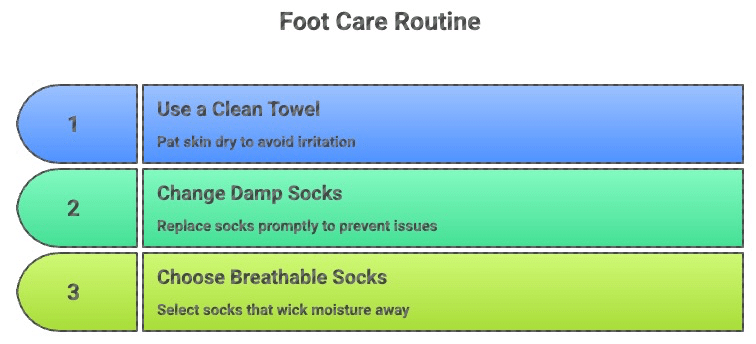
If your feet sweat heavily, change socks during the day. Let your feet air out when appropriate. Consistent moisture control supports treatment effectiveness, strengthens skin integrity, and helps prevent reinfection.
Disinfect Shoes Regularly
Disinfect your shoes regularly because fungal spores can remain inside footwear and re-expose your skin even while you’re treating athlete’s foot. If you want lasting results, treat your shoes as part of the source of the infection. Use an antifungal spray or powder labeled for footwear, and follow product directions exactly. Focus on the toe box, insoles, and interior seams where moisture accumulates.
You should also rotate pairs to let each pair dry fully for at least 24 hours. Wash removable insoles and discard badly worn shoes that retain odor or dampness. If you share locker rooms, gym bags, or sports equipment while serving others, these steps help protect both your feet and the people around you. Consistent shoe disinfection reduces the risk of recurrence and supports complete, hygienic recovery over time.
Why Choose Specialty Urgent Care for Athlete’s Foot Treatment in Pontiac, MI
When athlete’s foot causes persistent itching, scaling, or burning, Specialty Urgent Care in Pontiac, MI gives you prompt evaluation and treatment without the delay of an emergency room visit. You receive focused care from board-certified clinicians who assess symptoms, rule out bacterial complications, and recommend evidence-based antifungal therapy that supports recovery and helps protect those you serve each day.
Prompt urgent care for athlete’s foot helps relieve symptoms, rule out complications, and support recovery without the wait of an emergency room visit.
- Efficient diagnosis: In-house lab services help confirm suspected fungal infection and guide treatment quickly, so you can return to work, family, and community responsibilities.
- Accessible, respectful care: Walk-in availability, multilingual support in English and Arabic, and acceptance of most insurance plans, including Medicaid and Medicare, make treatment practical and clear.
- Convenient follow-through: Free parking, valet options, and a full-service urgent care setting simplify each step, helping you seek care early and reduce spread to others.
You don’t have to delay treatment when timely care can relieve symptoms and limit recurrence.

Frequently Asked Questions
Can Athlete’s Foot Spread to Other Parts of the Body?
Yes, athlete’s foot can spread to other parts of your body. If you touch the infected skin and then touch your hands, groin, or nails, you can transfer the fungus and cause new infections. You reduce that risk by washing your hands, keeping skin clean and dry, changing socks daily, and avoiding shared towels. If symptoms worsen or persist, you should seek prompt medical evaluation and targeted treatment.
How Long Does Athlete’s Foot Usually Take to Clear?
You can expect athlete’s foot to start improving within 1 to 2 weeks, but it often takes 2 to 4 weeks to clear fully with consistent antifungal treatment. If you stop treatment too soon, it can return. More severe or nail-involved cases may take longer. You should keep the area clean and dry, and continue taking the medication exactly as directed, even after symptoms fade, to protect both yourself and others.
Is Athlete’s Foot Treatment Safe During Pregnancy?
Yes, athlete’s foot treatment is usually safe during pregnancy, but you should confirm each medication with your clinician before use. You can often use topical antifungals like clotrimazole or miconazole, while oral antifungals usually require more caution. You’ll protect both yourself and your baby by avoiding self-prescribing stronger medicines. Keep your feet clean and dry, change socks often, and seek medical guidance if symptoms persist or worsen.
Can Children Get Athlete’s Foot and Need Treatment?
Yes, your child can get athlete’s foot and may need treatment if symptoms persist or spread. You should watch for itching, redness, peeling, or cracking between the toes. You can often help with antifungal creams, clean socks, and dry footwear. If your child has pain, worsening rash, or repeated infections, you should seek medical evaluation promptly. Early care helps maintain comfort, prevent spread, and support faster overall recovery.
Do You Accept Walk-Ins for Athlete’s Foot Treatment?
Yes, you can walk in for evaluation and treatment. You’ll receive prompt care with minimal wait, and your clinician will assess your symptoms, confirm whether it’s athlete’s foot or another skin condition, and recommend appropriate treatment. If needed, you can also get testing to rule out related concerns. You’ll see an experienced medical team focused on respectful, efficient care, so you can start treatment quickly and protect others from spread.
If you’re dealing with itching, burning, scaling, or cracking between your toes, prompt evaluation helps you recover faster and reduces the risk of spread or secondary infection.
In Pontiac, MI, Specialty Urgent Care offers timely treatment for athlete’s foot, with diagnostic support and appropriate antifungal therapy through Urgent Care Services.
You should also keep your feet clean, dry, and protected to prevent recurrence. With convenient access, insurance-friendly options, and experienced clinicians, you can start effective treatment today without delay. View more of our other services offered at Specialty Urgent Care in Pontiac, Michigan:
- Vaccinations in Pontiac MI
- EKG Testing in Pontiac MI
- Ear Wax Cleaning in Pontiac MI
- COVID Test in Pontiac, Michigan
- Drug Testing in Pontiac, Michigan
- UTI Testing in Pontiac, Michigan
- Ear Infection Test in Pontiac, Michigan
- Bladder Infection Treatment in Pontiac MI
- Swimmer’s Ear Treatment in Pontiac MI
- Pink Eye Treatment in Pontiac MI
- Mono Testing in Pontiac MI
- COVID-19 Testing in Pontiac MI
- Flu Test in Pontiac, Michigan
- Strep Throat Testing in Pontiac, Michigan
- Physical Exams in Pontiac, Michigan
- On-site X-rays in Pontiac, Michigan


